WickArc — Quantitative Research & Evidence Platform
WickArc is a live quantitative-research platform I built to turn market hypotheses into versioned, inspectable decision records. Instead of treating a backtest or model score as a conclusion, the system preserves the research question, point-in-time information boundary, measurable outcome, modeled costs, invalidation rules, temporal evidence, calibration, stress tests, and unresolved limitations. Statistical and machine-learning research can feed the workflow, but the application is designed to abstain when the evidence does not support a qualified result. Public examples are synthetic and are not trading-performance claims.
Summary
- Software & Applications
- Flagship
- Continuing
Evidence on file
My contribution
I designed and built WickArc’s research workflow, Evidence Passport, quantitative-validation architecture, public synthetic demo, account/workspace application, and production service boundaries. I implemented structures for versioned research questions and strategies, point-in-time research definitions, historical backtests, out-of-sample and walk-forward evaluation, probability calibration, transaction-cost and stress testing, evidence lineage, and abstention rules.
I also built the production application and trust/status infrastructure around the research system. The public product deliberately keeps statistical or machine-learning internals behind server-side boundaries while exposing the event definition, evidence type, calibration state, robustness checks, limitations, and research lineage needed to interpret a result.
Project overview
Why I built this
After spending more than a year studying and trading price action, I became interested in a harder problem than finding patterns: which parts of a market thesis could be defined precisely enough to test, and how could I prevent a promising historical result from turning into more confidence than the evidence justified?
WickArc grew from that question. I wanted a research system that preserved the question, assumptions, data boundary, costs, failure conditions, and later evidence instead of reducing the entire process to one backtest curve or confidence score.
Public WickArc interface evidence
- 01Evidence Passport. The research record keeps claim, temporal evidence, cost sensitivity, calibration, holdout state, invalidation conditions, and lineage visible instead of collapsing them into one score.
- 02Public synthetic research workspace showing historical backtests, walk-forward studies, calibration diagnostics, cost sensitivity, and an explicitly unrevealed final holdout. Displayed values are illustrative, not trading performance.
What WickArc is
WickArc is a live quantitative-research application for turning a market hypothesis into a versioned, inspectable evidence record. Statistical or machine-learning work can feed the workflow, but a score is never the whole result. The application keeps the research question, information boundary, outcome, costs, invalidation conditions, temporal evidence, calibration, robustness checks, and unresolved limits together.
It is research infrastructure, not an automated trading bot or investment-advice service. Public examples use fictional instruments and synthetic values.
The Evidence Passport
An Evidence Passport is a versioned decision and research record. It preserves the argument around a result rather than displaying only a probability, backtest curve, or agreement score. It is an application record, not an independent certification.
- Research question, claim or measurable outcome, point-in-time universe, information cutoff, evaluation horizon, modeled costs, and invalidation rule.
- Backtest, out-of-sample, walk-forward, or separately recorded forward evidence, each identified by what its timing can actually establish.
- Calibration state, stress tests, final-holdout state, unresolved limitations, and the lineage of the dataset, strategy, policy, and experiment definition.
Define the test before the result
Passport Studio begins with a research contract: the question being tested, eligible instrument universe, information available at decision time, exact measurable outcome, evaluation horizon, costs, and invalidation criteria.
Writing that contract first makes look-ahead, undefined labels, and a question changed after the answer easier to detect. It does not eliminate every possible source of bias; it makes the intended boundary explicit and reviewable.
Historical testing is not forward evidence
WickArc labels evidence by when and how it was produced. Historical methods can be useful without being presented as a forward record.
- Historical simulation under stated strategy, cost, and execution assumptions.
- Historical evaluation on a period kept separate from fitting or selection. It is still historical evidence.
- Repeated chronological fitting or configuration followed by evaluation on later windows, so future observations cannot influence earlier decisions.
- A forecast recorded before the defined outcome becomes observable. It remains a separate evidence type rather than a relabeled historical result.
Walk-forward validation
Walk-forward evaluation repeatedly fits or configures research using earlier data and evaluates later windows under the defined procedure, reducing the risk of treating the entire historical period as simultaneously available.
Chronological separation is stronger evidence than evaluating the same period used for selection, but it does not prove future robustness or turn historical evidence into live forward performance.
Probability calibration
Calibration asks whether eligible historical forecasts near a stated probability realized near that frequency on the defined evaluation data. WickArc keeps that question separate from one forecast’s outcome and from profitability.
Sparse bins can be unreliable, changed market conditions matter, and calibration never guarantees an individual outcome. An uncalibrated score is not presented as a substitute for a calibrated probability.
Costs and stress testing
An apparent result is challenged under explicit cost and robustness assumptions. Stress tests help reveal sensitivity; they cannot enumerate every future event.
- Transaction costs, slippage, and financing or borrow costs where applicable.
- Parameter changes, alternate time periods, market regimes, and execution assumptions.
- Surviving a chosen stress set does not establish achieved returns, guaranteed accuracy, or future robustness.
When the correct answer is “no qualified setup”
WickArc can abstain when the stated requirements are not met: insufficient observations, unavailable calibration, stale inputs, excessive disagreement, weak stress evidence, unsupported costs or liquidity, or missing prerequisites.
Abstention means the available evidence does not support a qualified setup under the stated research policy. It is not a prediction that the market will stay flat.
Versioning and research lineage
WickArc preserves versioned datasets, strategies, research policies, and experiment definitions. An issued forecast retains its original probability, timestamp, outcome definition, and horizon; later outcomes are recorded separately rather than rewriting the earlier record.
Failed, rejected, and unsuccessful research belongs in the lineage too. Keeping it visible reduces the temptation to show only the winner of a search.
Statistical and machine-learning research layer
The research core can use multiple statistical and machine-learning model families, but public research summaries expose evidence and validation rather than proprietary model identities, features, weights, training data, or selection logic.
Model agreement describes compatibility or disagreement among eligible forecasts. It does not establish correctness, probability of success, or profitability; similar models can share the same blind spot.
Production architecture and Trust Center
WickArc is a deployed web application with server-side research and workspace boundaries. Its public Trust Center exposes a live, read-only point-in-time readiness probe without exposing private research artifacts.
- Web application, research API, PostgreSQL primary data store, and Redis queue/cache path.
- Server-enforced authentication and workspace authorization; private research artifacts are excluded from public responses.
- Automated build, type, lint, security, dependency, and release checks, plus separate production monitoring.
- The status is a current readiness check, not a historical uptime percentage, SLA, SOC 2 claim, penetration-test certification, or regulatory certification.
What the public demo demonstrates
The public demo shows how a question moves through a research contract, historical evidence, calibration and cost-sensitivity views, abstention rules, holdout state, and an Evidence Passport. Its instruments, counts, experiments, and displayed values are synthetic and illustrative.
The demo does not represent Saharsh’s actual research history, customer data, measured market performance, or a verified forward record.
What it does not establish
This project does not establish achieved profitability, customer returns, a verified forward trading track record, guaranteed accuracy, live brokerage execution, or a trade recommendation. WickArc is not presented as investment advice or an automated trading bot.
What I learned
The most important design choice was treating “not enough evidence” as a result the software has to represent, not an error state to hide. A careful research system needs to preserve timing, definitions, costs, failed work, and later outcomes because those details decide what a numerical result can mean.
Building the production application also made the boundary between research logic and public explanation concrete: private model internals can remain server-side while the evidence type, calibration state, limitations, and lineage stay inspectable.
Evidence
Related work
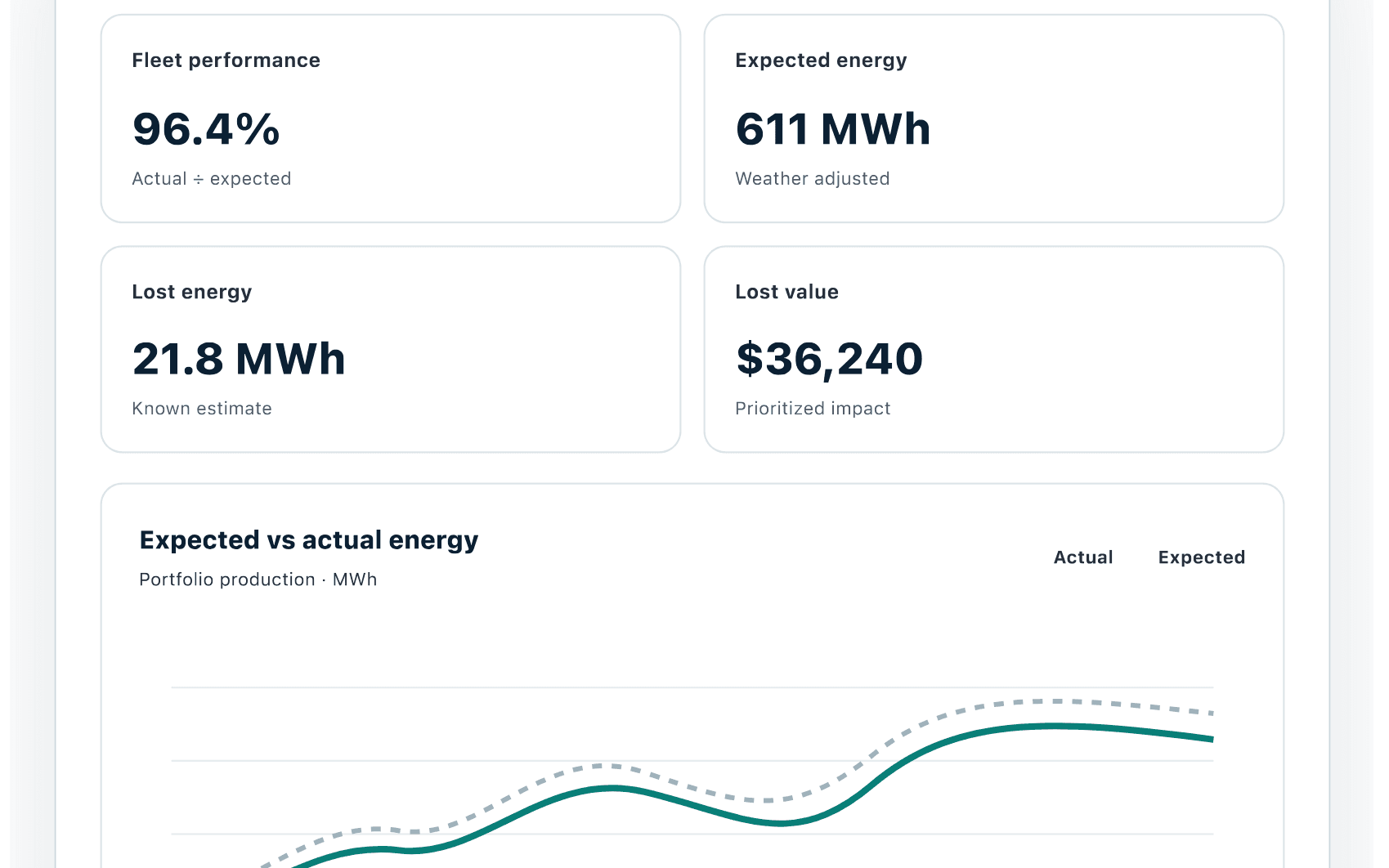
Solar photovoltaic performance intelligence: a deployed application for comparing measured and expected production and investigating persistent underperformance. Public demonstrations use fictional/reference data while the analysis pipeline continues to be validated and expanded.
Live home-information software that connects household structure, equipment, documents, maintenance, utilities, and evidence provenance, with separate measurement and scientific-analysis workflows.