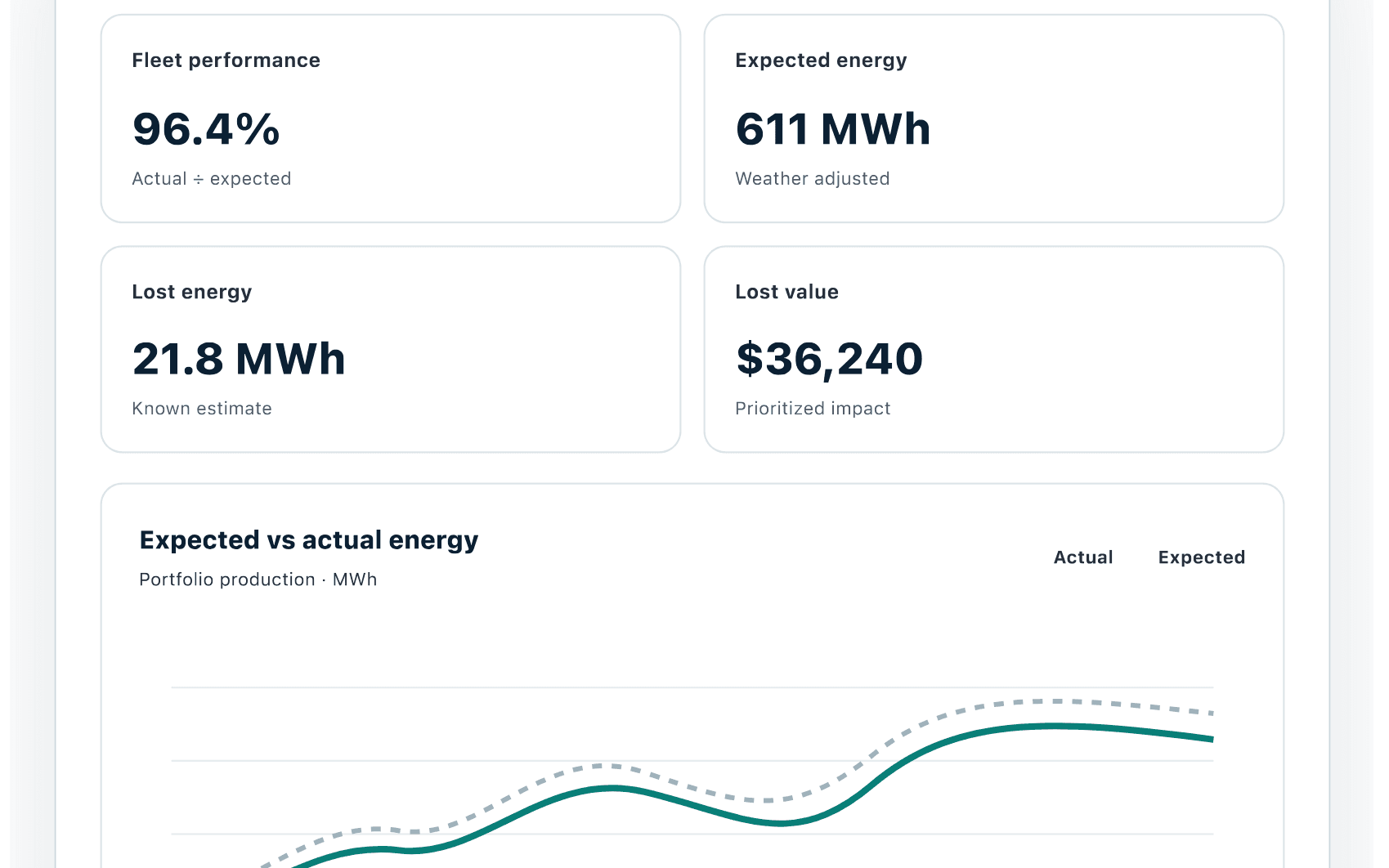
Solar photovoltaic performance intelligence: a deployed application for comparing measured and expected production and investigating persistent underperformance. Public demonstrations use fictional/reference data while the analysis pipeline continues to be validated and expanded.
I built and simulated a crossed-nanowire optical detector model in Tidy3D FDTD, using orthogonal NbTiN detector elements inside a multilayer SiO₂ and gold optical stack. The completed V1 run records electric-field distributions and directional flux near 1.55 µm. The crossed geometry was intended to reduce polarization dependence, but the surviving simulation uses only one incident linear polarization — so polarization insensitivity remains a design goal rather than a demonstrated result.
In developmentSimulation dataDocumentationComputational ElectromagneticsFDTD
I designed a computational nanophotonics study around a simple question: can an optical metasurface remain useful after realistic fabrication defects are introduced? The model is a 6 × 6 periodic supercell of TiO₂ nanodisks on glass, with missing disks, radius and height variation, and positional jitter. Instead of optimising only a perfect geometry, I designed the Tidy3D FDTD workflow around robustness — transmission, reflection, diffraction, field behaviour, and a quantitative defect-sensitivity metric.
I also iterated through earlier Tidy3D models and completed multiple solver runs. Those development runs used earlier geometry and wavelength settings, so I treat them as evidence of the simulation workflow rather than validation of the final visible-band defect-tolerance study.
In development3D modelSimulation dataComputational ElectromagneticsFDTD