Skip to content
Saharsh Engineering Log

Project archive

Projects

Software applications, electronics, aerospace systems, physics modeling, and quantitative analysis documented with their evidence.

Flagship applications

02

Deployed applications with the fullest public engineering record.

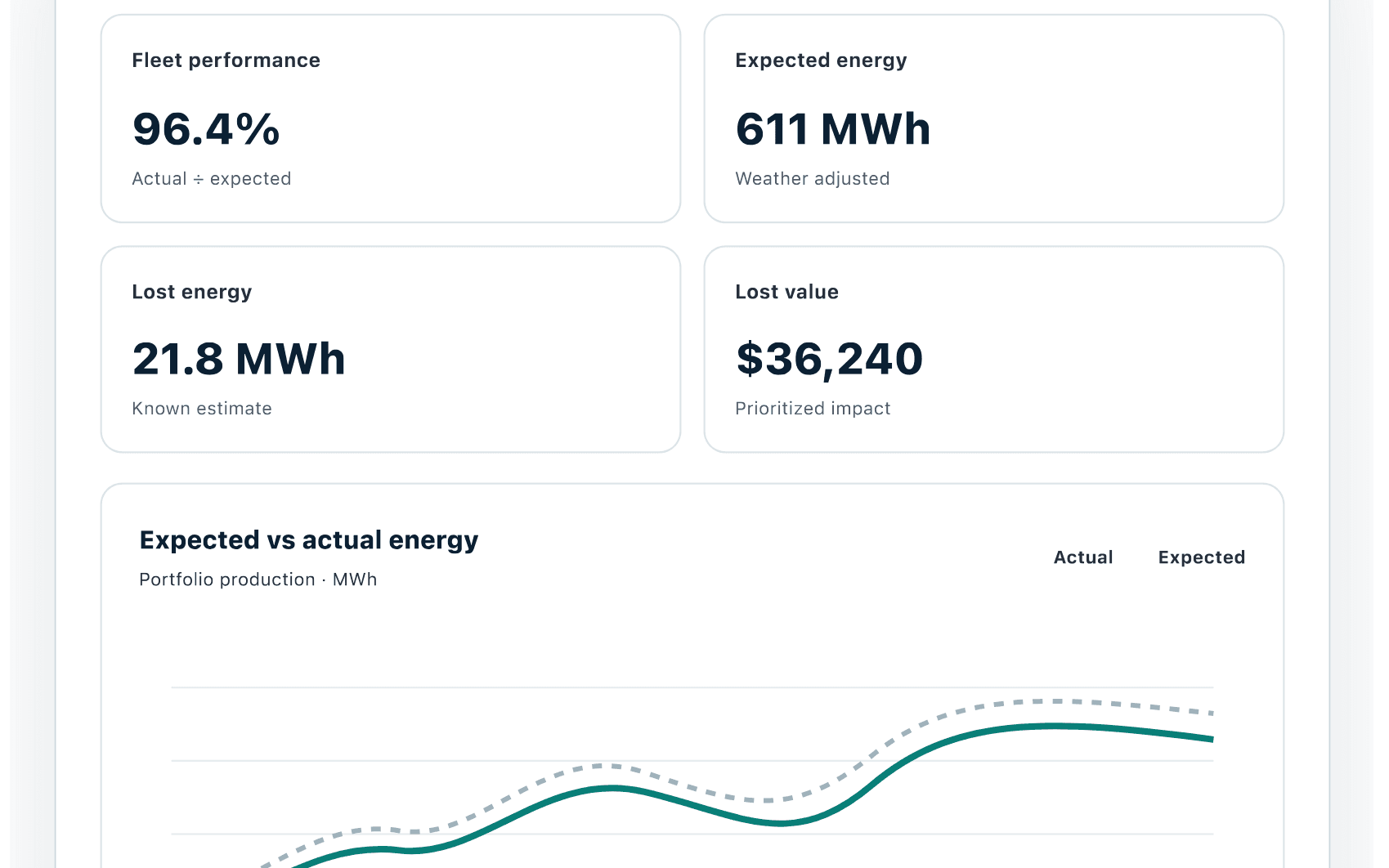
ArraySignal portfolio command center showing performance, expected energy, modeled loss and an actual-versus-expected production chart.
01Flagship

ArraySignal

Software / Physics / Quantitative

Solar photovoltaic performance intelligence: a deployed application for comparing measured and expected production and investigating persistent underperformance. Public demonstrations use fictional/reference data while the analysis pipeline continues to be validated and expanded.

LiveContinuingProduct interface
QuantitativeSoftwareSolar Physics
Physics
02Flagship

DwellMetry

Physics / Software

DwellMetry is a live home-information application I built to organize a home’s structure, equipment, documents, maintenance history, and utility records in one place. I also used it as a research environment for exploring thermal behavior, expected-performance models, telemetry, and anomaly reasoning, but those scientific features are not presented here as generally available or field-validated product capabilities.

LiveContinuing
Building PhysicsDigital TwinSoftware

Physics & Modeling

04

Optical-design and simulation studies built around explicit physical questions and numerical evidence.

Major project

I built and simulated a crossed-nanowire optical detector model in Tidy3D FDTD, using orthogonal NbTiN detector elements inside a multilayer SiO₂ and gold optical stack. The completed V1 run records electric-field distributions and directional flux near 1.55 µm. The crossed geometry was intended to reduce polarization dependence, but the surviving simulation uses only one incident linear polarization — so polarization insensitivity remains a design goal rather than a demonstrated result.

In developmentSimulation dataDocumentationComputational ElectromagneticsFDTD
Major project

I developed a multi-element broadband optical-delivery model in Ansys Zemax OpticStudio and evaluated it across multiple wavelengths, field angles, and three saved configurations. The prescription uses fused silica and CaF₂ elements with multiple powered and AR-coated surfaces. Native analyses include configuration-matrix spot diagrams, polychromatic diffraction encircled energy, and wavefront evaluation. The design concept included polarization preservation as an objective, but the saved evidence here does not contain a polarization-specific metric, so I do not present that behavior as demonstrated.

In developmentSimulation dataDocumentationBroadband OpticsDiffraction
Major project

I designed a computational nanophotonics study around a simple question: can an optical metasurface remain useful after realistic fabrication defects are introduced? The model is a 6 × 6 periodic supercell of TiO₂ nanodisks on glass, with missing disks, radius and height variation, and positional jitter. Instead of optimising only a perfect geometry, I designed the Tidy3D FDTD workflow around robustness — transmission, reflection, diffraction, field behaviour, and a quantitative defect-sensitivity metric. I also iterated through earlier Tidy3D models and completed multiple solver runs. Those development runs used earlier geometry and wavelength settings, so I treat them as evidence of the simulation workflow rather than validation of the final visible-band defect-tolerance study.

In development3D modelSimulation dataComputational ElectromagneticsFDTD
Project

I developed two related sequential optical models in Ansys Zemax OpticStudio to study how a microlens could direct broadband solar illumination toward a small rectenna microcell plane. The models explore different lenslet geometries, wavelength ranges, and field angles. Native OpticStudio outputs include 3D layout, optical-path-difference analysis, and saved 850-nm wavefront results. Because the two prescriptions and pupil conditions differ, I treat their results as evidence of design exploration rather than a controlled before-and-after performance comparison.

In developmentDrawingsSimulation dataGeometrical OpticsMicrolens

CubeSat Payload Design Series

06

Six Rev A electronics studies exploring different measurement problems in small-spacecraft payload design. Each began as a schematic-level design and was reviewed for what the measurement actually required, what Rev A contained, and what would need to change next.

Project

I designed the first electronics revision of a CubeSat solar-flare payload in EasyEDA, integrating the payload computer, onboard storage, power regulation and protection, visible-light sensing, magnetometry, development interfaces, and spacecraft connections. A design review then exposed the most important limitation of Rev A: the schematic contained the supporting electronics, but not yet the dedicated X-ray detector and low-noise analog front end required to make it a functional solar X-ray instrument.

In developmentDocumentationCubeSatDesign Review
Project

I designed the first electronics revision of a CubeSat payload intended to measure small-scale irregularities in ionospheric plasma. Rev A brings together a low-current probe front end, programmable probe bias, high-resolution digitisation, GNSS time and position, onboard storage, magnetic and thermal context sensing, and an RP2040 payload computer. The design review then identified the physical-probe, analog, guarding, bias-range and interference-control work still required before fabrication.

In developmentDocumentationCubeSatData Acquisition
Project

I designed the first electronics revision of a CubeSat receiver intended to detect very-low-frequency electromagnetic signals produced by lightning. Rev A combines a search-coil input, analog amplification and filtering, 12-bit digitisation, event-processing electronics, power and protection, and ground-development interfaces. Reviewing the design made the harder part clear: a sensitive VLF receiver has to distinguish natural signals from aliasing, calibration signals, and electrical noise generated by the spacecraft itself.

In developmentDocumentationCubeSatData Acquisition
Project

I designed the first electronics revision of a CubeSat payload intended to detect gamma-ray bursts and timestamp individual detector pulses precisely enough for comparison with other spacecraft and observatories. Rev A brings together pulse amplification, triggering, pulse-height digitisation, GNSS timing, storage, SiPM bias power, housekeeping, and an STM32 payload computer. Reviewing it exposed the most important remaining gaps: the scintillator and SiPM detector head is not yet present, pulse shaping still has to be added, and the timing path must be calibrated end to end before the timestamps can support scientific comparison.

In developmentDocumentationCubeSatEasyEDA
Project

I designed the first electronics revision of a CubeSat photometer intended to measure the brightness of a selected star over several hours and look for the small, repeatable dip caused by a known transiting exoplanet. Rev A combines a BPW34 photodiode, a transimpedance amplifier, a 16-bit ADC, a calibration-light interface, onboard storage, power and development electronics. The design review made the harder problem clear: a transit-like dip can also be produced by pointing error, temperature drift, stray light or electronics drift, so those effects have to be measured well enough to rule them out.

In developmentDocumentationAnalog Front EndCubeSat
Project

I designed the first electronics revision of a CubeSat particle monitor intended to map how energetic-particle radiation changes along an orbit during quiet and storm-time conditions. Rev A explores multiple silicon-detector channels, pulse amplification and shaping, programmable thresholds, coincidence detection, contextual magnetic and motion sensing, onboard storage, and spacecraft interfaces. The design review made the central challenge clearer: four detectors are only useful as four science channels if their geometry, shielding, calibration, timing and independent signal paths are actually defined.

In developmentDocumentationCoincidence DetectionCubeSat