Skip to content
Saharsh Engineering Log

Project archive

Projects

Software applications, electronics, aerospace systems, physics modeling, and quantitative analysis documented with their evidence.

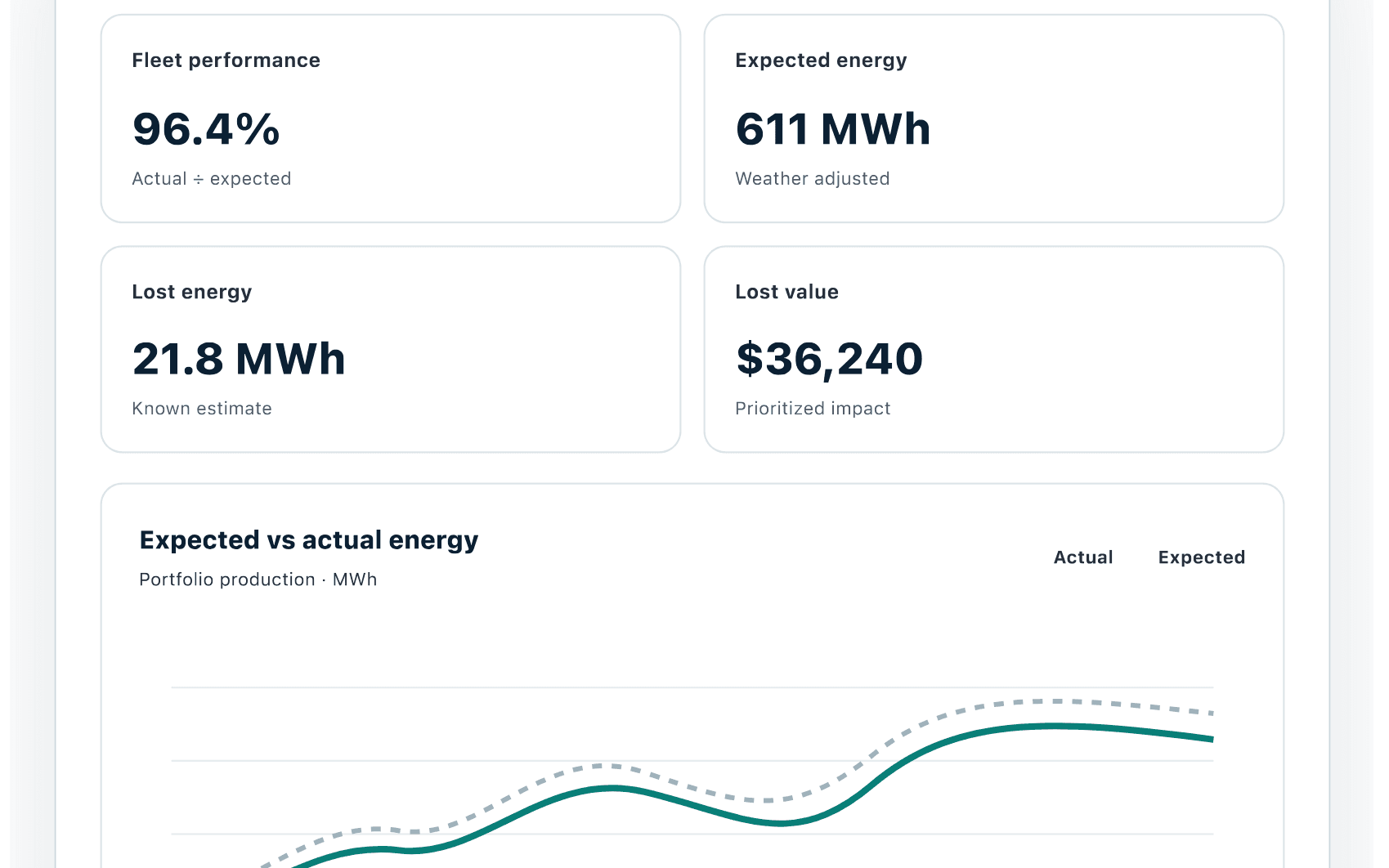
ArraySignal portfolio command center showing performance, expected energy, modeled loss and an actual-versus-expected production chart.
Flagship

Solar photovoltaic performance intelligence: a deployed application for comparing measured and expected production and investigating persistent underperformance. Public demonstrations use fictional/reference data while the analysis pipeline continues to be validated and expanded.

LiveContinuingProduct interfaceQuantitativeSoftware
Flagship

DwellMetry is a live home-information application I built to organize a home’s structure, equipment, documents, maintenance history, and utility records in one place. I also used it as a research environment for exploring thermal behavior, expected-performance models, telemetry, and anomaly reasoning, but those scientific features are not presented here as generally available or field-validated product capabilities.

LiveContinuingBuilding PhysicsDigital Twin
Major project

I built and simulated a crossed-nanowire optical detector model in Tidy3D FDTD, using orthogonal NbTiN detector elements inside a multilayer SiO₂ and gold optical stack. The completed V1 run records electric-field distributions and directional flux near 1.55 µm. The crossed geometry was intended to reduce polarization dependence, but the surviving simulation uses only one incident linear polarization — so polarization insensitivity remains a design goal rather than a demonstrated result.

In developmentSimulation dataDocumentationComputational ElectromagneticsFDTD
Major project

I developed a multi-element broadband optical-delivery model in Ansys Zemax OpticStudio and evaluated it across multiple wavelengths, field angles, and three saved configurations. The prescription uses fused silica and CaF₂ elements with multiple powered and AR-coated surfaces. Native analyses include configuration-matrix spot diagrams, polychromatic diffraction encircled energy, and wavefront evaluation. The design concept included polarization preservation as an objective, but the saved evidence here does not contain a polarization-specific metric, so I do not present that behavior as demonstrated.

In developmentSimulation dataDocumentationBroadband OpticsDiffraction
Major project

I designed a computational nanophotonics study around a simple question: can an optical metasurface remain useful after realistic fabrication defects are introduced? The model is a 6 × 6 periodic supercell of TiO₂ nanodisks on glass, with missing disks, radius and height variation, and positional jitter. Instead of optimising only a perfect geometry, I designed the Tidy3D FDTD workflow around robustness — transmission, reflection, diffraction, field behaviour, and a quantitative defect-sensitivity metric. I also iterated through earlier Tidy3D models and completed multiple solver runs. Those development runs used earlier geometry and wavelength settings, so I treat them as evidence of the simulation workflow rather than validation of the final visible-band defect-tolerance study.

In development3D modelSimulation dataComputational ElectromagneticsFDTD
Project

I developed two related sequential optical models in Ansys Zemax OpticStudio to study how a microlens could direct broadband solar illumination toward a small rectenna microcell plane. The models explore different lenslet geometries, wavelength ranges, and field angles. Native OpticStudio outputs include 3D layout, optical-path-difference analysis, and saved 850-nm wavefront results. Because the two prescriptions and pupil conditions differ, I treat their results as evidence of design exploration rather than a controlled before-and-after performance comparison.

In developmentDrawingsSimulation dataGeometrical OpticsMicrolens